Long-Bell Lumber Company
.jpg/:/cr=t:4.29%25,l:2.24%25,w:95.51%25,h:36.94%25/rs=w:365,h:182.5,cg:true,m)
Three young men went into the business of selling hay in Columbus, Kansas. A major expense was the lumber to build a wagon to deliver the hay and sheds to store it. They found out that hay was a poor business but that lumber was in high demand. They tore down the sheds and sold the lumber.
Little did Robert A. Long, Victor Bell, and Rober
Three young men went into the business of selling hay in Columbus, Kansas. A major expense was the lumber to build a wagon to deliver the hay and sheds to store it. They found out that hay was a poor business but that lumber was in high demand. They tore down the sheds and sold the lumber.
Little did Robert A. Long, Victor Bell, and Robert White envision what the Long-Bell Lumber Company would become when they formed their lumber business in 1875. The rapid growth of settlement throughout Kansas and Oklahoma and the opening of the Oklahoma Territory gave emphasis to Long-Bell’s expansion. As railroads pushed tracks throughout the area, communities sprang up needing building supplies. Retail yards quickly followed with Long-Bell in the forefront.
Establishing retail yards, Long-Bells core business, soon led to acquiring production facilities to supply this rapidly growing business. By the late 1890’s and early 1900’s Long-Bell was on solid ground, ready to expand from Arkansas and Oklahoma Territory into Louisiana and Texas.
With the rapid expansion of production, Long-Bell began to have a wider profile in the American Lumber scene. In 1899, the company shipped 170 million board feet of lumber, with production of 135 million and purchases of 35 million feet. By 1915, production was up to 500 million board feet of Southern Pine and Hardwood lumber. Long-Bell would be the second largest producer of Hardwood lumber in the United States The high point in company production was 1925, with 12 mills and a capacity of 800 million board feet.
In order to attract a huge and reliable workforce, Long-Bell built not one, but two family-friendly towns! While Longview was a showplace of a city, the "real town" of Ryderwood meant loggers could sleep in their own beds at night. Ryderwood had 400 single-family homes and reached a maximum population of approximately 2,000.
Both towns had the same amenities, Ryderwood's just weren't quite as grand. Both had a mercantile, a community hall, school, community church, theater, hospital and hotel. Longview's hotel was the Monticello, Ryderwood's was the Tavern - yet liquor was not available in either town. R. A. Long maintained an apartment in the Monticello to use when he was in Washington.
To collect and transport lumber, the company ran a number of railroads. It constructed the Longview, Portland, and Northern RR to serve its company town of Longview, Washington.
Long-Bell, having seen the need of reforestation in the South, determined that at no time would it permit its timber lands in the West to become depleted. As a result, they instituted a five-year program of reforestation of its timber land holdings in the State of Washington immediately after the company began operations there. In connection with this program, a large forest nursery was established near Ryderwood, Washington, for the production of plant stock sufficient to complete the stocking of from three to four thousand acres of land annually.
There were company names such as Long-Bell Farm Land Corporation, Long-Bell Demonstration Farm Company, and Longview Development Company for property in Longview, Washington. R. A. Long Properties was Long’s personal holding company, Texas Naval Stores Company ran a turpentine distillery, and Hudson River Lumber Company had operations in DeRidder, Louisiana. The King-Ryder Lumber Company in Bon Ami, Louisiana, was the first Long-Bell venture in Louisiana; it also owned mills at Thomasville in Indian Territory, Winthrop, Arkansas, and Hudson, Arkansas just south of Ashdown, Arkansas.
The company operated The Long Bell Cabinet Division located at Longview, Washington, in the former drying sheds of the lumber mill they operated there for decades. The division manufactured kitchen and bath cabinets marketed in Sears and Montgomery Ward catalog and retail stores as well as through the company's lumber distribution yards. The division occupied approximately 23 acres under roof and the supervisors used bicycles to go between departments. The division was sold in approximately 1981 and eventually the plant was closed. Old-growth timbers from the structural framework of the plant have been recycled into many upscale homes, and a book of photographs has been published by an architect/builder who took a fondness to preserving a bit of history.[1]
When the Long-Bell Company moved to Kansas City it first had offices in the Keith & Perry Building, but by 1906 it had outgrown this space. Long decided to construct a new office building that would symbolize the growth and influence of his company and the promising future of Kansas City. Henry Hoit was commissioned to design the structure. A graduate of the Massachusetts Institute of Technology, Hoit was best-known at that time for designing the Palace of Varied Industries Building at the 1904 St. Louis World’s Fair.
The R. A. Long Building was planned and constructed in 1906 at the cost of $1.4 million. The fourteen-story, Italian Renaissance Revival Style tower became the first skyscraper in Kansas City to be built with a steel frame, a key feature that allowed for the construction of much taller buildings. At its opening, the building included many new modern features such as water, lighting and heating systems, and six high-speed elevators. It opened to the public on April 25, 1907, with reportedly thousands of visitors in attendance.
In 1918, Long-Bell was faced with depleted timber holdings and faced dissolution without a major move west. Timber sources were non-existent in the south. The decision was made to move west and a large block of timber purchased in Southwest Washington, and the largest mill system in the world was erected at Longview, Washington. Two mills were built with one opening in 1924 and the second in 1926. With the building of the mills, a new community was also built to house the employees.
The 1930s depression hit Long-Bell hard. Overproduction by the industry accelerated the downward slide of price levels for lumber. Long-Bell financed itself by selling industrial bonds, and declining sales revenue drove Long-Bell to receivership by 1934. The company vowed that every cent would be paid and it took from 1935 until March 1944 to recover and Long-Bell was able to accumulate capital allowing it to purchase timber and other producing units, extending the life of the company until the merger with International Paper in 1956.
Long-Bell Lumber Company

Long-Bell Lumber Mill, Weed, California
Saw Mill, De Queen, Arkansas
Long-Bell Lumber Company, Weir City, Kansas
1000 Cords of Wood, Long-Bell Lumber Company, Kelsa, Washington
Headquarters Building, Long-Bell Land Corporation, Ludington, Louisiana
Mill District, Dallas, Oregon
Long-Bell Lumber #4 June 22, 1951
Track of Lumber in Weed, California 1914
Logging Horse - 1914
Altus, Oklahoma, circa 1880
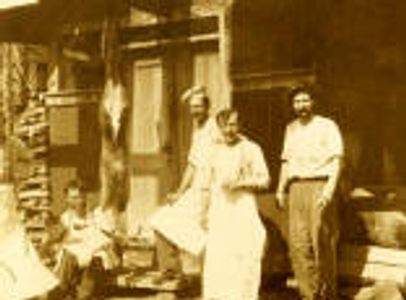
Cook Shack,Weed, California 1913 Logging Camp
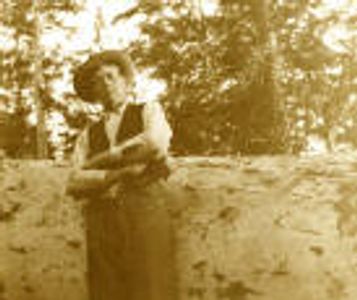
Long-Bell Lumberjack Weed, California
Long-Bell Saw Mill, Longview, Washington
Long-Bell Lumber Mills, Longview, Washington
Port, Dock and Long-Bell Mill, Longview, Washington
Partial View of Long-Bell Lumber Plants, Longview, Washington
The Long-Bell Creosoting Method
The Long-Bell method of creosoting is known as the Pressure-Vacuum treatment. This is the most thorough and efficient method, because it does the work in such a manner that the entire sapwood is thoroughly impregnated through and through with creosote, and not merely on the surface or in spots. But the Pressure‑Vacuum treatment is not possible unless the equipment is complete, and this equipment is so huge and complicated that it is out of the question for the individual farmer to have a creosoting plant of his own operated on this principle. Furthermore, the economic side of wood preserving is a big handicap to the farmer who tries home-made methods. The farmer can seldom obtain a high quality creosote and as his purchases are in small quantity, the cost is relatively high. Furthermore, the use of an open tank, as commonly employed in home treatments, means a considerable loss of creosote by evaporation.
It is obvious that posts creosoted with the Pressure-Vacuum treatment will more than live up to the claims we are making – namely, to give perfect service and satisfaction for at least 35 to 50 years.
The Long-Bell Pressure-Vacuum treatment insures complete impregnation. It represents the most advanced ideas in making posts decay-proof, and requires equipment only possible because of this organization’s vast resources and extensive research work to benefit the farmers of America.
All L-B Creosoted Yellow Pine Fence Posts are treated full length by the Pressure-Vacuum process. The posts, ready cut to required sizes, with all bark peeled off, thoroughly air-seasoned, are loaded in cages especially constructed for the purpose and run right into large air-tight steel cylinders, after which the cylinder doors are closed and the cylinders filled with creosote from elevated tanks. Pumps, exerting very high pressure, are then put into operation and the creosote forced into the wood until the cells of the sap-wood are practically filled, after which a powerful vacuum is applied and the surplus oil drawn from the wood.
The three L-B creosoting plants have a monthly capacity of three hundred thousand posts and poles, in consequence of which the cost of treatment per post or pole remains very low.
Aside from the actual operation at our three creosoting plants, this company has developed efficient methods of handling posts and poles direct from the pine forests to the plants and thence to the distributing points throughout the country. Doing business on a large scale enables us to keep the cost per post down to a reasonable figure and, considering the permanency represented by L-B Posts for fence construction, these posts are by far the most economical of all.
Every phase of the production of treated posts from the pine forests to the creosoting plants and from the plants to distributing yards has only one feature as the goal – the complete satisfaction of the purchaser, for the actual use is the real test of quality.